
Ramshorn snails are excellent at keeping aquariums clean, as they feed on algae, uneaten food, and decaying plant matter, making them natural tank cleaners.
These snails come in various colors, from brown and red to pink and blue, adding diversity and beauty to your aquarium.
Ramshorn snails can thrive in a variety of water conditions, making them a great choice for both beginner and experienced aquarists.
These snails are prolific breeders, capable of quickly populating a tank, which can be beneficial for maintaining a healthy ecosystem but may require population management.
Ramshorn snails are commonly known by two scientific names: Planorbella duryi and Planorbis planorbis. While both species share the characteristic coiled shell, Planorbella duryi is more often seen in aquariums and comes in a variety of colors, while Planorbis planorbis is typically found in the wild.
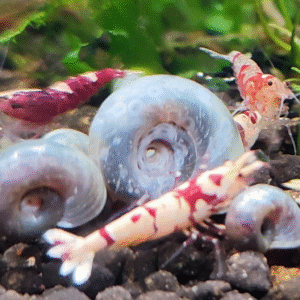
Ramshorn snails are easy to care for and can adapt to a wide range of water conditions, making them a great addition to most freshwater aquariums. These hardy snails can thrive without specific water requirements, making them suitable for various setups, even in unheated tanks.
💧 Recommended Water Parameters
• Temperature: 20–26°C (68–79°F)
• pH: 7.0–8.0
• Hardness: Medium to hard (for shell health)
• Minimum tank size: 10 liters (2.5 gallons)
A well-planted tank with ample hiding spots is ideal for Ramshorn snails, as they enjoy exploring their surroundings. They are peaceful creatures that coexist well with other non-aggressive species. However, overpopulation can become an issue if they have abundant food sources, particularly uneaten fish food or decaying plant matter.
Feeding them is simple, as they primarily consume algae, decaying plant material, and leftover fish food.
Ramshorn snails are active grazers and often seen gliding across glass, plants, and substrate in search of algae. They tend to be most active in low light or shortly after feeding, making them fun to observe during quiet tank moments.
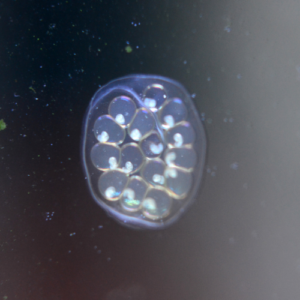
Ramshorn snails are prolific breeders, with the ability to reproduce quickly under optimal conditions. They are hermaphroditic, meaning that each snail possesses both male and female reproductive organs, allowing any two snails to mate. Once eggs are laid, they are typically attached to solid surfaces like plants or tank walls in small, jelly-like clusters. These eggs will hatch in about two weeks, and the baby snails will quickly become part of your aquarium’s ecosystem.
While their rapid reproduction can be beneficial for cleaning up algae and detritus, overpopulation can become an issue, especially in tanks with abundant food sources. Too many snails can lead to excessive waste production and competition for resources with other species. To control the population, you can limit food availability by not overfeeding your fish, manually remove egg clusters, or introduce natural predators, like certain fish species that feed on snails.
Regular tank maintenance and mindful feeding practices are key to keeping a balanced snail population, ensuring your Ramshorn snails contribute positively to the overall health of your aquarium.
While Ramshorn snails are hardy and adaptable, they can sometimes experience shell health problems. Soft or eroding shells are often a sign of calcium deficiency in the water. This can be remedied by adding calcium supplements to the tank or providing calcium-rich foods, such as algae wafers.
Another issue to watch out for is poor water quality. Although Ramshorn snails are tolerant of a range of conditions, consistent water changes and monitoring of ammonia, nitrate, and pH levels are necessary to prevent stress and keep them healthy. This advice is also applicable to fish and shrimp, as maintaining proper water quality is essential for all aquatic life. Keeping the tank clean will ensure your snails, as well as any fish or shrimp in the tank, remain in top condition.
Ramshorn snails are peaceful and non-aggressive, making them excellent companions for a wide range of freshwater species. They coexist well with other calm aquarium inhabitants and are often kept alongside shrimp and small community fish.
🟢 Good tank mates include:
•🦐 Neocaridina and Caridina shrimp
•🐠 Small peaceful fish such as guppies, rasboras, and tetras
•🐌 Other non-aggressive snails like Mystery snails or Nerites
🟡 Caution with:
•🐟 Betta fish – Some individuals tolerate snails, while others may nip at them
•🐡 Larger fish – Always monitor compatibility, especially if fish show curiosity toward snail movement
🔴 Avoid housing Ramshorn snails with Assassin snails (Clea helena).
Although Assassin snails are peaceful toward fish and shrimp, they naturally prey on other snails. If you’re intentionally using Assassin snails to control a Ramshorn population, they will slowly reduce the numbers, but this makes them unsuitable as long-term tank mates if you wish to keep Ramshorns as part of your cleanup crew.
As with any mixed species setup, it’s a good idea to observe new additions closely during the first few days to ensure all inhabitants are getting along well.
Not typically. They feed on algae and decaying matter but might nibble on soft or damaged leaves.
Yes, they’re peaceful and commonly kept with Neocaridina and Caridina shrimp.
This is usually caused by low calcium levels. Offer calcium-rich foods or supplements to support shell health.
Usually 1 to 2 years in well-maintained aquariums.
Very quickly, they’re hermaphroditic and can start laying eggs within days in the right conditions. If food is abundant, populations can grow rapidly. To keep numbers under control, avoid overfeeding your fish or shrimp, as leftover food is a major trigger for breeding.
It depends. Some hobbyists see them as helpful algae eaters and detritus cleaners. Others consider them pests due to how quickly they reproduce. Whether they’re helpful or unwanted often comes down to how much control you want over your tank’s appearance and balance.
They help by eating algae and leftover food, but regular maintenance is still required.
Rarely, but it can happen if the water level is high or the water quality is poor.
Small, jelly-like clusters often found on glass, plants, or decor. Inside, you’ll see tiny white dots, the developing snails.
• Temperature: 20–26 °C (68–79 °F)
• pH: 7.0–8.0
• Medium to hard water for strong shells
If Ramshorn snails have overrun your tank and you want to reduce or remove them, start by cutting back on feeding. Excess food fuels their population growth. You can manually remove them, clean out egg clusters from glass and plants, or use a bait trap. For long-term control, some aquarists introduce Assassin snails (Clea helena), which naturally prey on other snails.