
Malaysian Trumpet Snails burrow through the substrate, helping to keep it loose and oxygenated. This prevents gas buildup and promotes healthy root growth in planted tanks.
While less vibrant than some other snails, Trumpet snails can have beautiful shell patterns, from speckled browns to smooth spirals that add subtle interest to your aquarium floor.
These snails are incredibly hardy and thrive in a wide range of water conditions. They’re ideal for low-tech or beginner tanks, and often survive where other species may not.
Trumpet snails are mostly active at night and reproduce live young (no eggs). While helpful in moderation, they can multiply quickly if food is plentiful, especially in overfed tanks.
Malaysian Trumpet Snails are commonly referred to by their scientific name: Melanoides Tuberculata. These snails are known for their elongated, conical shells and burrowing behavior. Originally found in Southeast Asia, they’ve become a popular addition to freshwater aquariums due to their hardiness and ability to improve substrate health
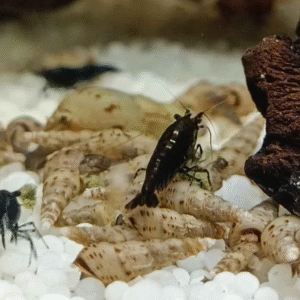
Malaysian Trumpet Snails are very hardy and thrive in a wide range of freshwater conditions. Their ability to tolerate low oxygen levels and various substrates makes them well-suited for beginner and low-maintenance setups, including unheated aquariums.
💧 Recommended Water Parameters
• Temperature: 20–28°C (68–82°F)
• pH: 6.5–8.0
• Hardness: Medium to hard (for shell development)
• Minimum tank size: 10 liters (2.5 gallons)
These snails prefer a tank with a soft, sandy or fine gravel substrate where they can burrow during the day. They’re peaceful and coexist well with other non-aggressive species. Because they reproduce through live birth and are active mostly at night, they can quickly increase in number if overfeeding occurs.
Feeding is easy. They eat algae, leftover food, and decaying plant matter. Minimal additional feeding is needed in a well-established tank.
Malaysian Trumpet Snails spend much of their time buried in the substrate, especially during the day. They become more active at night, emerging to forage and stir the substrate, helping to prevent gas buildup and improve overall tank health.
Malaysian Trumpet Snails reproduce quickly under favorable conditions. Unlike many other snails, they are livebearers, meaning they give birth to fully formed baby snails instead of laying eggs. A single snail can reproduce asexually, and populations can increase rapidly in tanks with excess food and detritus.
While their ability to reproduce helps maintain a clean substrate, overpopulation can become a concern, especially in tanks that are overfed. A large number of snails can lead to increased waste and clouded water conditions.
To control their numbers, avoid overfeeding, regularly clean the substrate, and manually remove excess snails if needed. In more extreme cases, some aquarists introduce Assassin snails (Clea helena) as a natural control method, though this is only recommended if you’re looking to reduce the trumpet snail population long-term.
Maintaining consistent tank hygiene and keeping food levels in check are the best ways to ensure your Malaysian Trumpet Snails contribute positively to your aquarium’s ecosystem.
While Malaysian Trumpet Snails are extremely hardy, they can occasionally experience shell issues. Thin or eroding shells are often a sign of low calcium levels in the water. This can be addressed by adding calcium supplements or offering calcium-rich foods, such as mineral stones, crushed eggshells, or algae wafers.
Another thing to monitor is water quality. Although Trumpet Snails can tolerate a wide range of parameters, poor water conditions (high ammonia or unstable pH) can stress them and lead to health problems. This is especially important in tanks with dense populations or minimal filtration.
Regular water changes and consistent testing of pH, ammonia, and nitrate will help ensure a clean environment for your snails, and all other tank inhabitants. A healthy tank means healthy snails.
Malaysian Trumpet Snails are peaceful, non-aggressive, and spend much of their time burrowed in the substrate. This makes them excellent tank mates for a wide variety of freshwater species, especially those that prefer calm environments.
🟢 Good tank mates include:
•🦐 Neocaridina and Caridina shrimp
•🐠 Small peaceful fish like guppies, rasboras, and ember tetras
•🐌 Other snails such as Nerite snails and Mystery snails
🟡 Caution with:
•🐟 Betta fish – Some tolerate trumpet snails, others may investigate or harass them
•🐡 Larger or curious fish – Keep an eye out, especially if fish are known to dig or nip
🔴 Avoid housing Trumpet snails with Assassin snails (Clea helena).
Assassin snails are effective snail hunters and will eventually eliminate trumpet snails if kept in the same tank. While they’re peaceful toward fish and shrimp, they’re not compatible if you plan to maintain a trumpet snail population.
As with any mixed-species tank, always observe closely during the first few days to ensure all inhabitants are peaceful and adjusting well.
Not likely. They prefer algae, biofilm, and leftover food. Their burrowing may disturb delicate root systems, but they won’t intentionally eat healthy plants.
Absolutely. Malaysian Trumpet snails are peaceful and coexist well with shrimp species like Neocaridina and Caridina.
Poor shell condition in Malaysian Trumpet snails is often due to a calcium deficiency. Provide calcium-rich foods, cuttlebone, or mineral supplements to improve shell health.
Malaysian Trumpet snails typically live 1–2 years in healthy freshwater aquariums with good water conditions and stable food supply.
Very fast. Malaysian Trumpet snails are livebearers and can reproduce quickly in tanks with abundant leftover food or detritus.
They can be if allowed to overpopulate. Malaysian Trumpet snails are useful tank cleaners, but limiting food and manual removal helps maintain balance.
Yes! They help by consuming leftover food and algae, and their burrowing keeps the substrate aerated and healthy.
No, Malaysian Trumpet snails usually stay buried in the substrate and rarely climb out of the tank like other snails might.
No. Malaysian Trumpet snails are livebearers, they give birth to fully formed baby snails rather than laying eggs.
Malaysian Trumpet snails thrive in 20–28°C (68–82°F), pH 6.5–8.0, and medium to hard water to support healthy shell growth.
To control the Malaysian Trumpet snail population, reduce excess food, stir the substrate regularly, or introduce predators like Assassin snails (If you no longer wish to keep them).